


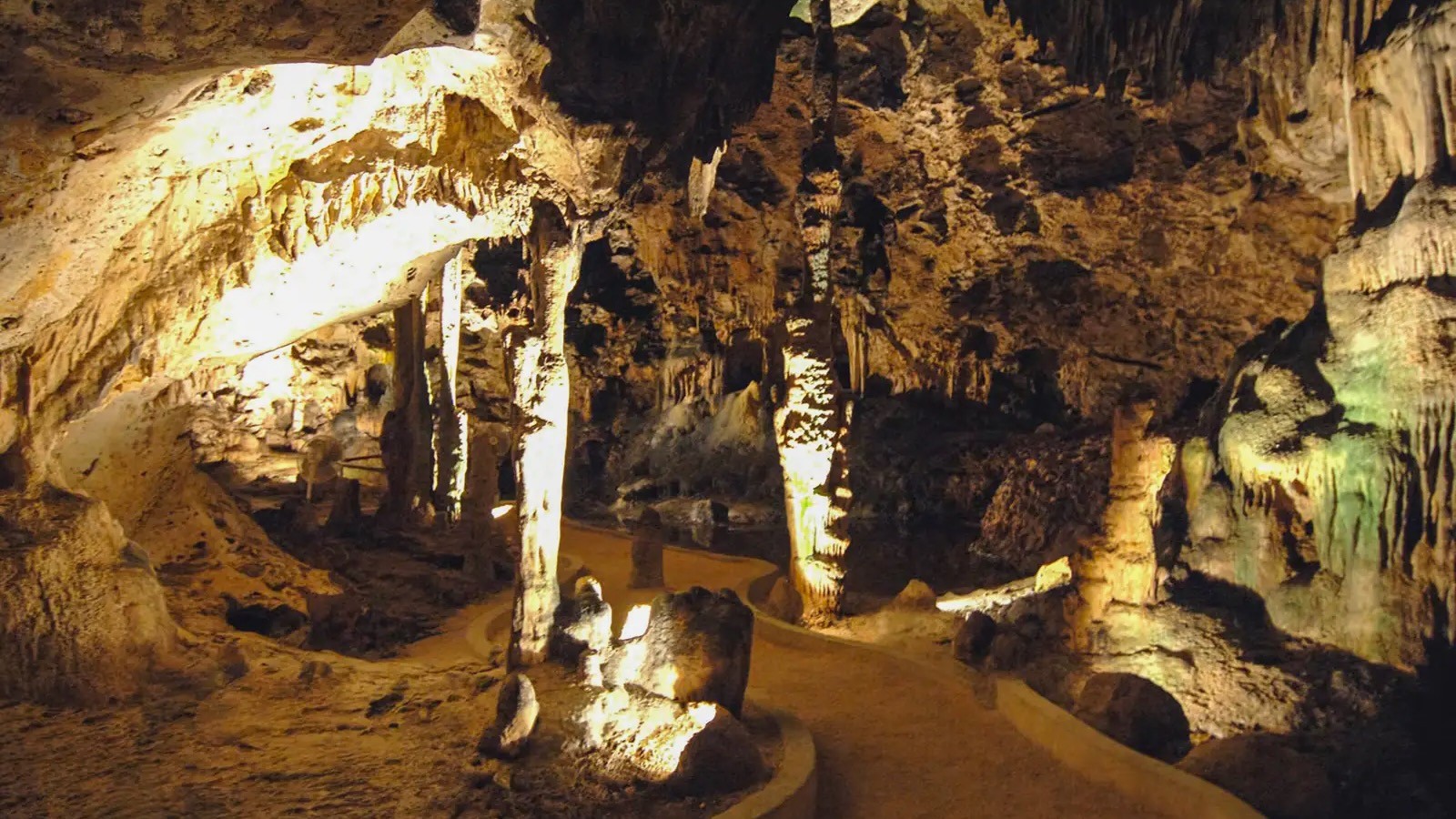
At Hato Caves, you climb up before heading inside. The entrance sits 49 steps above the surrounding ground, close to Curaçao’s airport, with a view across the area before you step into the limestone chambers. Inside, stalactites hang from the ceiling, stalagmites rise from the floor and pools of water catch the light.
The guided tour takes around 45 minutes, with stories that help you make sense of the shapes around you. Look for the formation known as the Madonna, or Mother Maria, and the colony of long nosed fruit bats that makes its home here. These chambers are a living habitat as well as a place to explore.
There’s human history here, too. The site holds thousands of years of Indigenous history, connecting a visit with the people who lived on Curaçao long before European arrival. Give the stories as much attention as the formations; both are part of what makes Hato worth visiting.
Wear comfortable shoes for the steps and follow your guide’s directions about photography and the bats. It’s a good stop for a closer look at the island’s geology and early history, with plenty to notice in a relatively short visit.
Details We Appreciate
● Guided tours explaining the formations and their familiar nicknames.
● The Madonna formation and pools within the cave.
● A resident colony of long nosed fruit bats.
● Indigenous history that adds another layer to the visit.